Spring Cottage House, Flower, Plants Embroidery Review
As a designer who spends more time staring at stitch density charts and fabric swatches than sleeping, I approach every new embroidery file with a mix of excitement and skepticism. The market is flooded with generic clipart disguised as machine-ready art, but occasionally, a design comes along that actually understands the medium. Today, I’m putting Spring Cottage House, Flower, Plants through its paces to see if it holds up in real-world production, or if it’s just another pretty picture that falls apart under the needle.
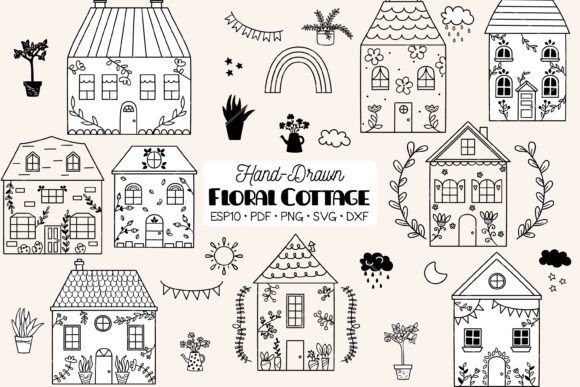
This bundle is categorized under Illustrations and Graphics, featuring hand-drawn country houses, cute home doodles, suns, moons, rainbows, clouds, wreaths, and wild flowers. It offers two distinct variations: 27 Black Outline and 27 Black Cutout versions. At first glance, the aesthetic is undeniably cozy. It taps into that warm, nostalgic "cottagecore" vibe that has been dominating craft fairs and online shops for years. But does it translate well to thread?
First Impressions and Visual Personality
The moment you open the files, the charm is evident. The line work feels organic rather than rigidly geometric, which suggests these designs were created with a human touch rather than an automated vector tool. For an embroidery project, this distinction matters. The curves of the cottage roofs and the scattered petals of the wildflowers allow for smoother needle movement compared to sharp, angular shapes that can cause puckering or thread breaks.
The mood is light, airy, and inviting. It screams springtime, morning coffee on a porch, or a quiet weekend in the countryside. This visual personality makes it incredibly versatile. It doesn’t feel aggressive or overly modern; instead, it feels timeless. That timelessness is crucial for handmade products because it ensures your inventory won’t look dated six months from now. Whether you are creating a tote bag design or a nursery decor piece, the imagery resonates with a broad audience seeking comfort and simplicity.
Real-World Application: From Screen to Stitch
I decided to test how Spring Cottage House, Flower, Plants would perform in a high-stakes scenario: a custom embroidered sweatshirt for a boutique client. The goal was to create a limited-run gift item for a local artisan market. I selected the black outline version, anticipating that the negative space would breathe well on a heather grey cotton blend fabric.
The result was striking. The stitch density appeared balanced, allowing the details of the cottage windows and the individual leaves in the wreath to remain distinct without clumping together. On a soft fleece or jersey knit, the design held its shape beautifully, provided a proper cut-away stabilizer was used behind the garment. The contrast between the dark thread and the lighter background fabric made the intricate details pop, giving the finished product a professional, high-end look.
Beyond apparel, this design is a powerhouse for smaller items. I envisioned it stitched onto a linen tea towel using a simple running stitch effect (if supported by the file structure) or as a dense applique design element. Imagine a set of matching kitchen towels featuring different elements from the bundle—a single wildflower, a small cloud, or the cottage itself. These personalized gifts sell exceptionally well on platforms like Etsy because they feel curated and thoughtful. The variety within the bundle allows you to create cohesive collections without repeating the exact same image across every SKU.
Where to Exercise Caution
No design is perfect, and Spring Cottage House, Flower, Plants is no exception. While it excels in larger formats, there are specific scenarios where you need to be careful. If you attempt to digitize or use these images in very small hoop sizes, such as those required for hat panels or tiny baby booties, you may lose critical detail. The fine lines of the house trim or the delicate stems of the flowers might merge into indistinguishable blobs if the scale is too small.
Additionally, textured fabrics can pose a challenge. On heavily woven burlap or thick chenille, the definition of the black cutout version might get lost. In these cases, the outline version might offer better visibility depending on your thread choice. Stretchy fabrics, like spandex blends, require extra attention to hooping tension to prevent distortion. If the cottage looks slightly warped after stitching, it’s likely a stabilization issue rather than a design flaw, but always test on scrap fabric first.
Avoid placing this design on curved surfaces like baseball caps unless you have significant experience with cap frames. The perspective of the house and the symmetry of the wreath might look off if the fabric isn’t perfectly flat during stitching. Furthermore, if you plan to wash these items frequently, ensure you are using high-quality polyester or rayon threads to prevent fading, which could dull the charming aesthetic over time.
Impact on Product Value and Branding
Using a well-executed design like this elevates the perceived value of your handmade product. Customers can often tell the difference between a mass-produced stamp and a carefully stitched embroidery. When a buyer sees the texture of the satin stitch or the precision of the fill stitches, they associate it with quality and care. This builds trust and encourages repeat purchases.
For Etsy sellers and small shop owners, this bundle offers excellent branding consistency. You can mix and match the elements—using the rainbow and cloud for a baby shower gift, and the cottage and plants for a homeowner closing package—to maintain a recognizable style across your entire shop. This coherence helps in building a brand identity that customers recognize instantly. The "cute home doodle" aesthetic also lends itself well to holiday embroidery themes, making it easy to pivot your inventory seasonally without starting from scratch.
Practical Designer Notes for Success
To get the best results from Spring Cottage House, Flower, Plants, keep these practical tips in mind:
- Test on Scrap Fabric: Always run a test stitch on the actual fabric you intend to use. This reveals how the material reacts to the needle and how the thread colors interact with the base cloth.
- Check Thread Contrast: Ensure your chosen thread colors provide enough contrast against the fabric. Light threads on light fabrics will disappear, while dark threads on dark fabrics may lack definition.
- Inspect Small Details: Zoom in on the digital preview. Look for any overlapping lines or tiny isolated pixels that might cause threading issues. If the file includes both outline and cutout versions, choose the one that best suits the complexity of your project.
- Use Proper Stabilizer: A good stabilizer is half the battle. Use tear-away for stable wovens and cut-away for knits and stretchy materials to prevent warping.
- Verify Licensing: Before selling finished items or digital embroidery files, double-check the license terms. Some illustrations allow commercial use on physical goods but prohibit reselling the digital files themselves. Confirming this upfront protects your business.
- Create Mockups: Use printable mockups to visualize how the design looks on different products before committing to production. This helps in marketing and gives customers a clearer idea of the final product.
In conclusion, Spring Cottage House, Flower, Plants is a solid addition to any embroiderer’s library. It captures a beloved aesthetic with enough versatility to suit everything from casual tote bags to delicate baby clothes. By paying attention to fabric choice, stabilization, and scale, you can turn these simple doodles into premium, saleable products that delight customers and stand out in a crowded marketplace.